Showing posts with label critical literacy. Show all posts

Wednesday, 6 July 2016

Food Fabulous Food - Picture books about food - newly published titles and some older favourites

It is with great excitement that I share with you some newly published picture books that feature food and good nutrition and would make excellent companion texts for titles like The Very Hungry Caterpillar.  For those of you who know me well, you know I have a little addiction to picture books and need to emphasise that picture books can be used across all year levels, not just in the early years.

You can read my previous blog posts about Monster Chef here and here.
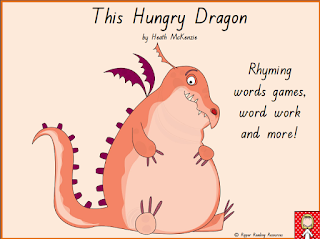
This Hungry Dragon is a newly published picture book from Scholastic.  This new title would be an excellent companion text to the There was an old lady who swallowed a...and the There was an old man who swallowed a...series.  The hungry dragon eats and eats until he is as big as a house and explodes.  This is a wonderful rhyming text and is also fabulous as a mentor text for teaching adjectives.

You can preview the resource I made for this picture book here which includes rhyming words games based on the book and vocabulary activities.

Budburra's Garden is a lovely picture book written by the children at Cherbourg State School.   A summary of the storyline from the website states:  

Join Sammy on a journey through Budburra’s garden, eating yummy foods and learning the colours on the way!


Budburra’s Garden introduces children (3-5 years) to the healthy eating concept of “eating a rainbow everyday” using colours and foods.
The book is artwork driven and very interactive, utilising repetition, descriptive words, visual clues and a back section including discussion points, fun recipes and bush tucker information.


I love the fact that this picture book was published in Cherbourg as I have a bit of a penchant for supporting the work of our Australian Indigenous picture book authors and illustrators, regardless of their age.

What's terrific about this picture book is that it introduces children to different nutritious foods (fruit and vegetables) according to their colours.  It is also terrific to use as a mentor text to reinforce learning about adjectives.  It also introduces students to traditional fruits and vegetables, but also traditional Australian Indigenous foods.  The picture book includes information about the bush tucker found in Budburra's Garden at the back of the book and recipes to "Colour Yourself Healthy".  I really think this is a powerful picture book with potential to be used on many levels.

I love Amy Krouse Rosenthal's previous titles Spoon and Chopsticks which are terrific companion texts to use with Spork by Kyo Maclear.  You can read my previous blog post about these titles here.  I love Amy Krouse Rosenthal's picture books as they take a real twist from different perspectives, so they are just terrific for critical literacy.  The blurb for Little Pea states:


If Little Pea doesn't eat all of his sweets, there will be no vegetables for dessert! What's a young pea to do? Children who have trouble swallowing their veggies will love the way this pea-size picture book serves up a playful story they can relate to.

Oliver's Vegetables and Oliver's Fruit Salad are lovely picture books that join this text set of companion texts of picture books that have similar themes and can be used together to consolidate learning.  Oliver's Vegetables is a terrific companion text for The Very Hungry Caterpillar as it also reinforces learning the order of the days of the week.  Read more on the author Vivian French's website here.  I must say I love growing my own veggies so this picture book really appealed to me and it is terrific for encouraging kids to try different nutritious foods.
Piranhas Don't Eat Bananas is another hilarious rhyming text by Aaron Babley.  You can preview my rhyming words games resource to support this picture book here or by clicking on the image of the resource. You can view other resources I have made to support Aaron Babley's picture books here.  

My resource for Thelma the Unicorn has been particularly popular, probably because the picture book has such an important storyline about self-acceptance and self-belief.  You can read about the awards this picture book has won here.

Piranhas Don't Eat Bananas has been shortlisted for the 2016 Australian Children's Book Week Awards!!

Together the picture books reviewed in this post would form the basis of a fabulous unit of work about food and to encourage healthy nutrition choices.

Watch this space as my next blog post will include a freebie for Budburra's Garden.

A big shout out and thank you for those of you who leave a comment on my blog posts, who follow my blog and who share my blog posts with their networks.  It is very much appreciated.

Food Fabulous Food - Picture books about food - newly published titles and some older favourites

It is with great excitement that I share with you some newly published picture books that feature food and good nutrition and would make excellent companion texts for titles like The Very Hungry Caterpillar.  For those of you who know me well, you know I have a little addiction to picture books and need to emphasise that picture books can be used across all year levels, not just in the early years.

You can read my previous blog posts about Monster Chef here and here.

This Hungry Dragon is a newly published picture book from Scholastic.  This new title would be an excellent companion text to the There was an old lady who swallowed a...and the There was an old man who swallowed a...series.  The hungry dragon eats and eats until he is as big as a house and explodes.  This is a wonderful rhyming text and is also fabulous as a mentor text for teaching adjectives.

You can preview the resource I made for this picture book here which includes rhyming words games based on the book and vocabulary activities.

Budburra's Garden is a lovely picture book written by the children at Cherbourg State School.   A summary of the storyline from the website states:  

Join Sammy on a journey through Budburra’s garden, eating yummy foods and learning the colours on the way!


Budburra’s Garden introduces children (3-5 years) to the healthy eating concept of “eating a rainbow everyday” using colours and foods.
The book is artwork driven and very interactive, utilising repetition, descriptive words, visual clues and a back section including discussion points, fun recipes and bush tucker information.


I love the fact that this picture book was published in Cherbourg as I have a bit of a penchant for supporting the work of our Australian Indigenous picture book authors and illustrators, regardless of their age.

What's terrific about this picture book is that it introduces children to different nutritious foods (fruit and vegetables) according to their colours.  It is also terrific to use as a mentor text to reinforce learning about adjectives.  It also introduces students to traditional fruits and vegetables, but also traditional Australian Indigenous foods.  The picture book includes information about the bush tucker found in Budburra's Garden at the back of the book and recipes to "Colour Yourself Healthy".  I really think this is a powerful picture book with potential to be used on many levels.

I love Amy Krouse Rosenthal's previous titles Spoon and Chopsticks which are terrific companion texts to use with Spork by Kyo Maclear.  You can read my previous blog post about these titles here.  I love Amy Krouse Rosenthal's picture books as they take a real twist from different perspectives, so they are just terrific for critical literacy.  The blurb for Little Pea states:


If Little Pea doesn't eat all of his sweets, there will be no vegetables for dessert! What's a young pea to do? Children who have trouble swallowing their veggies will love the way this pea-size picture book serves up a playful story they can relate to.

Oliver's Vegetables and Oliver's Fruit Salad are lovely picture books that join this text set of companion texts of picture books that have similar themes and can be used together to consolidate learning.  Oliver's Vegetables is a terrific companion text for The Very Hungry Caterpillar as it also reinforces learning the order of the days of the week.  Read more on the author Vivian French's website here.  I must say I love growing my own veggies so this picture book really appealed to me and it is terrific for encouraging kids to try different nutritious foods.
Piranhas Don't Eat Bananas is another hilarious rhyming text by Aaron Babley.  You can preview my rhyming words games resource to support this picture book here or by clicking on the image of the resource. You can view other resources I have made to support Aaron Babley's picture books here.  

My resource for Thelma the Unicorn has been particularly popular, probably because the picture book has such an important storyline about self-acceptance and self-belief.  You can read about the awards this picture book has won here.

Piranhas Don't Eat Bananas has been shortlisted for the 2016 Australian Children's Book Week Awards!!

Together the picture books reviewed in this post would form the basis of a fabulous unit of work about food and to encourage healthy nutrition choices.

Watch this space as my next blog post will include a freebie for Budburra's Garden.

A big shout out and thank you for those of you who leave a comment on my blog posts, who follow my blog and who share my blog posts with their networks.  It is very much appreciated.

Monday, 11 April 2016

Incorporating Indigenous Australian perspectives within the curriculum

Hi everyone

This is a very brief post.  I wanted to share with you a post I did earlier this year for the Australian Teachers' Collaborative Blog on Australian Indigenous Perspectives.  

It took me a great deal of time to research and consult about the ideas in that blog post and I hadn't realised that I hadn't shared that thinking and those ideas on my own blog.

This image was reproduced with permission from Magabala Books and the illustrator, Renee Fogorty, of the children's picture book, "Fair Skin, Black Fella".

The ideas and resources I shared are just terrific for embedding Indigenous Australian perspectives within the curriculum and I also shared ideas for developing critical literacy in the middle and upper primary years - ideas that I have seen in action in classrooms in very powerful ways.

You can read my blog post about ideas and resources for embedding Australian Indigenous Perspectives within the curriculum here
http://australianteachers.blogspot.com.au/2016/01/australian-indigenous-perspectives-and.html

Please note that the giveaways mentioned in that blog post have been completed!

Have a terrific week!

Saturday, 24 January 2015

Close reading and the Four Resources Model (con't)

Last week I posted about a new project I was working on, linking the U.S. research on close reading with the Australian research around the Four Resources Model (Freebody & Luke, 1990).

I created three resources to use with a school I was working with this week.  The first one is based on the picture book, "Blossom Possum - The Sky is Falling Down-Under" (see below):
This resource was designed for students in the early years (up to Year 3).
The second resource is based on two original poems by Angela Yardy - Seaside Senses and The Shell. 

Each resource includes purposeful reasons for the students to re-read the text and engage with it in different ways to deepen their comprehension.
Please click on the images above to find out more.

My third resource is based on figurative language, using a poem called "The Snake" from the NAPLAN (Australian National Testing) Year 5 magazine.  I am just waiting for copyright clearance on that one before I post it to TPT.  

Both of the resources based on poetry are quite challenging for students in Year 5 and above.

By linking close reading to the Four Resource Model prompts, students engage multiple times with the text for different purposes.  To me, this is much more rigorous NAPLAN preparation than practising past tests.

If you would like to win a free copy of one of these resources, please make sure you are following my blog.  You can do this for free by clicking on the "follow me by bloglovin' " button, or via email.  Please leave a comment below with your email address and which resource interests you the most.  I will choose 3 winners randomly over the next week.

A very big shout out to all the Australian teachers who follow my blog - enjoy your first week of the new school year, next week :)

Monday, 29 December 2014

Picture books with animals as activists

Nothing like a little bit of anarchy to bring in the New Year :)


I just love text sets/companion texts and think they really help the students to make text-to-text connections using compare/contrast of textual features etc. to develop higher order thinking.  The picture books I am featuring today work together beautifully.

Let's start with Click, Clack, Moo Cows That Type by Doreen Cronin and what a controversial little picture book this has become!  I love this story of literate cows who can type and leave notes for Farmer Brown regarding improvements they want to see made to their conditions on the farm.  The social critical literacy person is like = Yay for social action!

Here's a little overview of ideas I put together using the Four Resource Model.  Find out more about the Four Resource Model for a balanced approach to literacy planning here. Unfortunately the hyperlinks in the table below won't work, however I will post some of the links to the issues around this book below the table.

However, others have interpreted the intent behind this entertaining story quite differently as you can see in the text analyst section of the table above.  You can read some of the controversy here and here.  What do you think?

Teaching resources for "Click, Clack, Moo, Cows That Type" can be found here.

Dear Mrs LaRue: Letters From Obedience School by Mark Teague is a wonderful companion text in that Ike LaRue is unhappy with being "imprisoned" at the Canine Academy and tries everything he can to be sent home including writing weepy letters to Mrs LaRue and feigning illness.  Another creative text for studying point of view, letter writing and persuasive text.  A letter template is available from Scholastic here, comprehension and vocabulary work based on the story here,  and a lesson plan on persuasive writing based on the book here


The Sheep Go on Strike by Jean-Francois Dumont is a wonderful story to teach about collaboration, teamwork and compromise.  The sheep are sick of being sheared so they decide to go on strike and the rest of the animals start to take sides until they all sit down together and the sheep learn how important their wool is to the farm.  the animals work together to come up with a creative solution to everyone's problem, so it is also an excellent story for problem/solution top level structure.

Animal Strike at the Zoo by Karma Wilson
focuses on the chaos at the zoo when the lions and bears refuse to roar, prowl and growl and go on strike.

I haven't used this text, so if you have, please leave a comment below about whether you would recommend it or not.

Finally, The Great Reindeer Rebellion by Lisa Trumbauer is my most recent purchase. The paperback edition was only published in 2014.  The reindeer are sick of pulling Santa's heavy sleigh, so they go on strike. Santa writes up a wanted advertisement for substitute animals and the results are hilarious.  Written in rhyme as an innovation on The Night Before Christmas, this is bound to be a firm favourite. 

It's also a terrific mentor text for teaching verbs, rhyming words, cause/effect and problem/solution.  This would be a terrific text to compare and contrast to "Click, Clack, Moo: Cows That Type" as Santa learns to compromise and meet the reindeers' demands to a sauna, real beds, a heater and cable television.

Do you know any other texts that would fit in with this text set about animals taking action against their current conditions?  If so, I would love you to leave a comment below so I may grow my collection.  Also if you know any other resources to match these texts, please leave the links below.  To leave a comment, just click on the link underneath my signature avatar.

I hope you all have a wonderful New Year's Eve and all the very best for 2015.

Wednesday, 5 March 2014

Picture books inspiring children to love reading...and a bit of a controversy!

I read a delightful post on the Sprout's Bookshelf blog about "Amadi's Snowman".  You can read that post by clicking on the image below.


When I was reading that post, I made a connection to a newly published Australian picture book which arrived today, "The Bush Book Club" by Margaret Wild, illustrated by Ben Wood (published March 2014, so hot off the press!!!)  You can read more about the book here.  This is a delightful story about a reluctant reader, Bilby. Everyone is in The Bush Book Club except Bilby as he cannot see the purpose of reading.  He finds that books can be useful for building towers and mazes, but eventually discovers that books are also full of adventures.  This is a wonderful title for exploring Australian animals and environments, inspiring children to read and for studying rhyming words and verbs...it is such a delightful read!!!  Check out Ben Wood's blog as he shares how he went about illustrating the book here.

This also reminds me of another book for students who aren't avid readers of printed text, "It's a Book" by Lane Smith.  You can view the book trailer here.  It wasn't until I was drafting this blog post that I realised there had been controversy about this book using the technical term for a male donkey - jackass.  You can read some positive reviews here and posts about the "controversy" here and here.  You'll find a balanced review here. If you scroll down at this link, you can listen to a podcast by the author, Lane Smith. What I love about this podcast is that Lane mentions that he has "never had a kid take offence at anything", maybe it's the adults who read more into it? 

Personally, I find the fact there has been a "controversy" a bit ironic as I don't understand why people would be upset about the technical term for a male donkey being used in a book and seriously folks, I think there are far worse words that children hear on a daily basis nowadays in real life and through the media.  I have found students I have shared this book with haven't even noticed yet alone reacted to the word "jackass" as anything offensive at all.

What do you think?  Please leave a comment as I am open to other points of view...Also, do you know of any other titles that encourage children to read?

Have a terrific week :)


Friday, 15 November 2013

From "Rain Dance" to "Flood"

My previous post introduced the book, "Downpour".  You can read that post in my November blog post archive (right hand side of the blog - scroll down).

Our Summer storms are continuing in Queensland and there are two other picture books I am really enjoying.  The first is called, "Rain Dance" by Cathy Applegate and Dee Huxley (2000).  Set in the Australian outback, this is a beautiful picture book that brings to life the importance of rain to outback communities and the impact of drought.  You can almost smell and feel the rain as it hits the parched earth in the outback.  Dee Huxley's illustrations capture the terrain and colours of the outback so well.  The author's text provides a visual image to support the illustrations (e.g. "Beyond our desolate farm I can see the horizon where a few dark clouds cruelly taunt us with promises of rain".)  This would be a great mentor text for exploring descriptive and figurative language.

Teaching notes for teaching visual literacy using "Rain Dance" and other texts are available in the publication on the right.  A free download of the contents page that shows the picture books examined is available by clicking on that image and then the link to see sample pagesThere is a chapter in the book on the right on "In Flanders Fields" (by Norman Jorgenson and Brian Harrison-Lever) which is set in World War 1.

http://www.hbe.com.au/visual-literacy-through-picture-storybooks-engaging-middle-years-students-in-literature.html
 A companion text for "Rain Dance" is an Australian indigenous picture book, "Big Rain Coming" by Katrina Germein and one of my favourite indigenous illustrators, Bronwyn Bancroft.  You can view a youtube reading of this title here or download teaching ideas here.  This story is set in Katherine in the Northern Territory of Australia when people were experiencing severe drought and the anticipation of rain. Other teaching notes are available here.  
 These Australian indigenous titles about the importance of rain and the anticipation of rain could be compared and contrasted to picture books from other cultures with a similar theme, for example, "Sing Down the Rain" (1977) which is a poem about the annual Tohono O'odham saguaro harvest and rain-making ceremony.  More information about this cultural ceremony can be read via the Southwest Cross-Cultural Wisdom Circle pageA choral reading script for this text is available here. 

It would be interesting to compare and contrast the animals mentioned in "Rain Dance" and also in "Sing Down the Rain" as the latter mentions ciquadas, however in Australia we have cicadas - I am wondering if they are the same thing?  Both texts also mention events and characters specific to the different cultures and contexts.  
http://www.candlewick.com/cat.asp?mode=book&isbn=0763653136

Another terrific picture book I have discovered recently is "The Rain Train" by Elena de Roo and Brian Lovelock (2010).  This is a fantastic picture book for exploring onomatopoeia.  You can almost hear and feel the rain as you read this picture book that tells the story of a train ride when the rain is pouring down.  You can almost feel the drizzle and chill through the illustrations.  Both the author and illustrator live in New Zealand.
 
Sometimes people live through droughts, wishing for rain and sometimes people experience too much rain and flooding.  In the past two years, people in South-East Queensland have experienced flash flooding and the devastation of flood waters. 

Two picture books that contrast representations of the experience of the Brisbane floods in January 2011 are Jackie French's "Flood" (illustrated by Bruce Whatley) and "Alex and the Watermelon Boat" by Chris McKimmie.  Both represent the events in different ways.  Figurative language could be explored using "Flood".  Caution needs to be taken, however, when sharing these picture books with students from the communities affected, as it may actually foster memories of loss and grief, so teacher judgement (as always) would need to be exercised.  Jackie French discusses "Flood" and how to handle some of these concerns here including students' positive reactions to the picture book ,which represents communities pulling together, survival and heroism.  The illustrations certainly bring back memories of the drench, the mud and the generosity of the thousands of volunteers (the "Mud Army").

From a critical literacy stance, I think it is far more powerful to compare and contrast how authors and illustrators represent the same event in different ways, through multiple texts, rather than just focusing on the study of representation of a single text.
 

Free teacher notes for "Flood" are available here through Scholastic or here through the Primary English Teaching Association Australia (which is an excellent organisation to be a member of if you aren't already - and no, they didn't pay me to say that!).   You can also view a youtube reading of "Flood" here.   


Free teaching notes for "Alex and the Watermelon Boat" are available here and teacher reviews are available here.
Please leave a comment if you know of any other texts that could be included in this text set, or if you have used any of the books mentioned in this blog post.

Now...next weekend is another huge giveaway of freebies from my friends who participated in the Super Sleuths blog hop last month...mark this in your diaries...my clip art has come and I am so excited about using it...so next weekend...don't miss "The Gift of Reading Blog Hop."

Many thanks


Thursday, 10 October 2013

Creepy Comparisons with a freebie

We don't really celebrate Halloween in my part of the world, however I really love the picture book, "Creepy Carrots" by Aaron Reynolds and Peter Brown. I think it would be a fun way to touch on Halloween, without any ghosts, witches or really scary stuff.


Jasper Rabbit loves carrots and he is paranoid that the carrots are out to get him.  This is a great text for close reading, as students can explore the illustrations for evidence to support why Jasper might think the carrots are following him.  It's also a great text for problem-solution (top level structure) - Jasper had a problem - how did he solve it?  In addition to this it is a wonderful text for extending students' vocabulary and teaching alliteration.  You can view the "Creepy Carrots" video here:


You can also visit the author's website and the illustrator's website to learn more about their work.

I created a "Creepy Carrots" vocabulary extension resource to support the text that includes:
Vocabulary matching cards
Vocabulary graphic organiser
Alliteration matching cards
Inferring prompts
Creepy vegie writing activity

I find that students often make text-to-self connections easily, but sometimes need support and scaffolding to make text-to-text connections.  That is why I often plan using companion texts.  A terrific companion text for "Creepy Carrots" is "Muncha! Muncha! Muncha!" by Candace Fleming.  You can view a youtube clip here and there are free teacher notes as well.


In a similar way to "Creepy Carrots", Mr McGeely has a problem with the hungry bunnies eating his vegetables.  Similar to "Creepy Carrots" he designs and builds a protective wall to protect his vegetable patch.  Students can compare and contrast the problems and solutions in both texts.  They may also compare and contrast the twists at the end of each story. 

I have created a freebie  with two venn diagrams to help with this.  Click on the images below to grab the freebie and to check out my "Creepy Carrots" resource.


Candace Fleming has a sequel to "Muncha! Muncha! Muncha!" called "Tippy-Tippy-Tippy, Hide!" and there are free teacher notes on her website.

Rhonda over at Reading Towards the Stars, has a wonderful freebie using past tense verbs - it's a fun game that students will love, so hop on over to Rhonda's blog to learn about this game and pick up your freebie :)  Any of these hyperlinks will take you there :)

I would love to hear from anyone who has used these texts in the classroom and how you used them.  Also, if you can think of any other companion texts that might fit in here, please let me know.

Have a great week!