Thursday, 5 June 2014

Collaborative Reading Workshop - great for higher order thinking

I'm excited to share with you one of the most simple but effective instructional approaches for higher order thinking in the middle years - Collaborative Reading Workshop.  

You can download my journal article about this approach and also my innovation on Reciprocal Teaching here.  

In my article, I use the lyrics to Michael Franti's song, "You Can Bomb the World to Pieces but you Can't Bomb it Into Peace" with a Year 7 class of students.  

Collaborative Reading Workshop is a really simple process where as a whole class, a text is shared and annotated.  Students highlight any unknown vocabulary and mark the text to hold their thinking.  I usually model how to mark (or annotate) the text on the interactive whiteboard. The student annotations include questions, connections and wonderings.

The students need to have their own copies of the text, a highlighter pen and three post-it notes (and I usually use three different colours for the three stages in this process).
After they have annotated their own copies of the text, the students choose their most burning question and write it on the first post-it note.  They take turns to come out the front of the classroom and share their burning question aloud before sticking it to the "Burning Questions" chart.  


Next, they choose a wondering - something that they are thinking or wondering about - and they write this on their second post-it note, then come out the front and share that aloud for the whole class, before sticking that post-it note to the "Wondering Wall."


Finally, the students make a connection - a text-to-text, text-to-self, or text-to-world connection.  I have found that the students in the younger years tend to mostly make text-to-self connections, so when I am modelling on the interactive whiteboard, I make sure I model the other two types of connections as well.  The students choose their favourite connection, write that on their third post-it note and then share that with the class before sticking it to the "Clever Connections" chart.


What was fascinating to me, was the depth of thinking that this simple process generates and student engagement is to the max.  I have been stunned by some of the students' thinking.  In fact, the students in my research project told me that they found generating their own questions and wonderings was way more rigorous and demanding than simply answering the teacher's questions and by sharing their thinking collectively, the depth of that thinking simply snowballs!

You can read the research behind this approach and view the depth of student thinking here. By examining the student responses, you can see that Collaborative Reading Workshop moves students on from literal thinking to being text analysts and critical thinkers.  The students then work in groups to sort their questions and wonderings into whether they can find the answer in their heads, in a book or somewhere else and work in teams to find the answers to their questions.

I use short provocative texts that will capture the students' interest - newspaper reports and song lyrics are just great!  You could also use advertisements and poetry...it's limitless really.

I really hope you and your students have fun with this approach, because each time I teach a Collaborative Reading Workshop lesson, I get goosebumps from the depth and insight in the students' questions and wonderings.

My wonderful clip art guru, Iva from etsy has created some clip art so I can share the three posters with you.  Print them out A3 or even larger (chart-sized for a whole class lesson).

I would love to hear from anyone who gives this approach a go. 

You can find the charts in my TPT store. (Click on the image below).

Saturday, 17 May 2014

Too many elephants - freebies


Australia's National Simultaneous Storytime Day is on 21 May and the text is 
"Too Many Elephants in This House" by Ursula Dubosarsky.
Click on the image above to read more about this text at the author's website.  
A YouTube read aloud is available here.

Find more ideas for Australia's National Simultaneous Storytime Day here and here and ideas for sharing this book here.

http://www.alia.org.au/sites/default/files/NSS%20activity%20ideas%201_0.pdf 
https://www.alia.org.au/nss

Other ideas can be found at this blog post from The Education Clinic.  

I have pinned ideas around elephants that could tie in with the sharing of this picture book here. I just love this YouTube clip of an elephant that joins in playing jazz on the piano.

"Elmer" would be a terrific companion text for this picture book.  View the YouTube clip by clicking on this link.

This elephant paper craft activity is just gorgeous.

Older students could research the ivory trade or the meanings of sayings such as "an elephant in the room", or "you have a memory like an elephant".  They could write persuasive texts about the ivory trade, circus elephants or elephants in captivity.  Please share any other ideas in the comments section below.

I have created a resource to support this book.  It will be free at my TPT store for a short time.

You can grab your copy by clicking on the image below.  If you download it, please leave feedback in my TPT store :)  Please also follow my blog (using the links in the right hand comment) to accept this giveaway.
I hope you enjoy this book as much as I did!  

Many thanks to Iva from etsy for her fabulous clip art.  Please check out her work herehttps://www.etsy.com/au/shop/nahhan73 

If you can think of any other great ideas for sharing this book or any other companion texts, please leave a note in the comments below.


Thursday, 15 May 2014

Elephant ideas

Hi friends

I need your help!!!  Please share ideas/strategies/resources/links for teaching about elephants in the comments section.

I am putting together a blog post for my fellow Aussie teachers around the topic of elephants, for Australia's National Simultaneous Storytime Day on 21 May (next week!!!).  For more information about the event, check out:  https://www.alia.org.au/nss 

I will be putting together some freebie resources to support my colleagues and a blog post with links etc.  My focus will be on supporting students/teachers in the middle years and probably around some of the socially critical issues surrounding elephants etc.

There are so many great ideas already shared by the author, illustrator, publisher and the Australian Library and Information Association.  Many of these are for the early years.

I don't know how to host a blog  linky, so please, if you have any great ideas/resources/links for teaching about elephants, or for this particular book, "Too Many Elephants in This House", please leave a comment in the comments section at the bottom of this post...

I really would appreciate your help in sharing ideas, as I would love my colleagues (after the National Testing this week) to have a fun, romping good time with their students that encourages and inspires reading :)

Can anyone think of any companion texts that might be suitable???  

All ideas would be greatly appreciated :)

Many thanks!
Kylie

Sunday, 4 May 2014

Possums and Emus

Two wonderful new picture books on Australian animals arrived today!


"Karana: The story of the father emu" is written by Uncle Joe Kirk who is a Brisbane and Wakka Wakka elder.  This is a wonderful Australian Indigenous picture book which would be terrific for teaching rhyme.  The book is about how Karana, the father emu, cares for his chicks and teaches them how to survive in the bush.  It is a circular story with lovely illustrations by Sandi Harrold.  

There are some interesting facts in here that I didn't know...did you know that baby emus swallow little stones?  Do you know why?

"Possum's Big Surprise" is a newly published picture book by Colin Buchanan and Nina Rycroft.  This is another great text for teaching rhyming words, verbs and adjectives.  It is a terrific picture book for predicting as well.  

These two picture books are just terrific to add to the study of Australian animals.  Do you have any other favourites?

Thursday, 10 April 2014

"Grumpy Cat", "Pete the Cat" and youth depression

Grumpy Cat has become an internet sensation.  You can check out the official Grumpy Cat Facebook page here or by clicking on the Grumpy Cat image.  His Facebook page has 4.8 million likes making him one popular cat!!!  


These images are reproduced from the official Grumpy Cat Facebook page and linked back to the source.

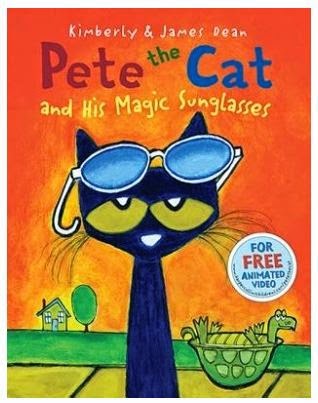
I have long loved "Pete the Cat" and was thrilled to purchase the latest in the series, "Pete the Cat and His Magic Sunglasses."  Now Pete is not a grumpy cat, but one day he is not happy and has the blue cat blues.  With the help of his cool blue magic sunglasses, he sees things in a different way. Click on the image below to view the YouTube book trailer.

You can read a blog post over at Chalk Talk about the children doing a retelling of "Pete the Cat and his Magic Sunglasses", a venn diagram activity for making text-to-text connections and  how the children explored character descriptions - their art work to go with the book is just great!  I love the link to companion texts at the end of the blog post.  

Back to Grumpy Cat...Did you know her real name is Tardar Sauce?  

The YouTube clip shows how Grumpy Cat has gone from a meme to a possible Hollywood sensation, giving Garfield some competition.  
A free conversation activity using the Grumpy Cat meme and focusing on adjectives can be found here.
Did you know that there is a picture book called, "Grumpy Cat" (2008) by Britta Teckentrup? 
Cat is lonely but the other cats think he is grumpy and never ask him to play, then one night during a terrible storm, everything changes.  This is a beautiful tale of friendship and I was smiling while reading it as it reminded me of my rescue puppy (who I truly believe is more like a cat) and does everything to try to get my attention when I am busy.  It would also be a useful mentor text for exploring comparatives and superlatives.  Activities for teaching using "Grumpy Cat" including lesson plans and blackline masters can be found here.

"To be a Cat" by Matt Haig was published in 2013. The description from the Book Depository states that Barney Willow's life couldn't get any worse. He's weedy, with sticky-out ears. Horrible Gavin Needle loves tormenting him - Barney has no idea why. And headteacher-from-hell Miss Whipmire seems determined to make every second of Barney's existence a complete misery.  It sounds like an interesting companion text within the "Grumpy Cat" theme.  Other companion texts are included below:
"Riley and the Grumpy Wombat" by Tania McCartney (2011) is a lovely picture book about a Riley and all his contraptions and inventions that he uses to try to solve the mystery of the grumpy wombat, that takes him all across Melbourne.  You can read a review of the book, view a book trailer and find activities here.  It is a terrific mentor text for introducing challenging vocabulary in context. The author shares her story of writing and a review of the book here and more from the author can be found here.  Other free activities to use with the book can be found here or here.  Free teaching notes are available here.  This Australian Curriculum unit of work on Melbourne would be useful for contextualising this book.

"Happily Ever After is so Once Upon a Time" by Yixian Quek (2012) features Belle, a seven year old who is pretty cynical actually for one so young, questioning what happens when you wish upon a star, whether dreams actually do come true and whether there really is gold at the end of the rainbow.  This would be a great text to support critical literacy and could be paired with "The Three Bears (Sort Of)".  You can read my previous blog post about that title here.

"The Grumpy Lighthouse Keeper" by Terrizita Corpus (2011) is set on a stormy night in a lighthouse in Broome, in Australia's North-West. Cassius the crab, Jacob the jellyfish, Bruce the bluebone and more sea creatures seek shelter from the storm in the lighthouse keeper's bed, all while the lighthouse keeper is out checking the lamp. When he gets back and discovers his bed has been taken over, he is, indeed, grumpy.  This title is another from one of my favourite publishers, Magabala Books.  Free teaching notes are available here.  This is an excellent mentor text for exploring onomatopoeia and alliteration.  

A review of the book including information about the iconic Gantheaume Point with the remains of the old lighthouse keeper's house at Cable Beach in Western Australia can be read here.

A free lighthouse board game is available here and a free educational resource about lighthouses and their history is available here.

It would be terrific to compare and contrast the different lighthouse keeper stories, for example, "The Lighthouse Keeper's Lunch" and "The Lighthouse Keeper's Picnic" using a Venn Diagram; or with other grumpy stories, for example, "The Bad-Tempered Ladybird".

"Mouse Was Mad" by Linda Urban (2012) is the story of a mouse who learns who to show he is mad.  Bear stomps.  Hare hops.  Bobcat screams, but mouse just sits still and quiet and learns that his own way might be best of all.  Free ideas for using this book can be found at the Book Nook here or from the Corner on Character blog post here.  Ideas for using the book and links for following up on discussing anger issues with children can be found here.  The Book Nook also has some terrific ideas for developing students' social and emotional learning skills here.

The World Health Organisation (WHO) states that depression is the leading cause of disability in both males and females and globally more than 350 million people of all ages suffer from depression.  According to WHO, depression is a common mental disorder, characterized by sadness, loss of interest or pleasure, feelings of guilt or low self-worth, disturbed sleep or appetite, feelings of tiredness, and poor concentration.  There is a series of books based on the metaphor of depression being like a black dog which are really helpful for people experiencing the effects of depression.  
Click on the link below to view a YouTube clip of "I Had a Black Dog".

The Black Dog Institute states that People aged 18-24 years have the highest prevalence of 
mental disorders of any other age group and youth suicide is the leading cause of death in 
young people aged 15-24 years (ABS, 2012). 

One of my favourite books for working with students to change their "stinking thinking" and do "a check up from the neck up" (i.e. to work on their social and emotional well-being and resilience) is "Mind Your Mind".  Click on the link or image below for more information.  The graphics of the Head Hassler and Mind Master with the mind mastering thoughts are very powerful.  

Information for teachers to support students suffering from depression or to support students' social and emotional well-being is available from:
You can access a pdf about depression in young people here

Ideas to support the social and emotional well-being of students have also been pinned on my pinterest board here. 

I hope you have found some of these ideas useful in supporting this sensitive, but very important topic.  I would be very interested in hearing about any other resources or children's books you have found useful in supporting students' social and emotional well-being.

Kind regards

Sunday, 6 April 2014

Bullies and bullying

A topic I am very passionate about - preventing bullying - whether that is in schools, online or in the workplace.

I recently discovered some new picture books that help raise and deal with this issue.  My current collection is large as this is a topic I used to teach with pre-service teachers, so I was delighted to discover some new additions.


"Dandelion" by Galvin Scott Davis (2013) is a delightful picture book written by a father (and author) when his own son experienced bullying.  I love the presentation of this book with its black pages, simple text and the story of Benjamin using his imagination and faith in dandelions to overcome bullying.  
A book review can be read here with a link to tips for overcoming bullying.   I found it interesting that Benjamin attends the "School for the Misguided" and I learnt not only about having courage and using your imagination but also the fact that the word "dandelion" means a lion's tooth.  The author discusses the creation and purpose of the book here:  A key message is that bullying is for people without imagination and that your imagination makes you very strong.  Another review can be read here and free teachers' notes are available through the publisher here (scroll down).  Find out how the book has raised money for the Sydney Children's Hospital Foundation here.

This story is about two friends Beth and Billy who move to middle school and realise they aren't as popular as they were in elementary school.  They experience bullying from older students and a new student named Gretchen.  They learn strategies for dealing with bullies with the help of their teachers, other adults and friends.  This sensitive and important topic is told through an interesting graphic novel style that embeds factual information about bullying within the narrative structure (e.g. identifying forms of bullying, helping a friend who is being bullied, getting help, cyberbullying etc.).  Writeen by Mike Cassidy, with the caption on the cover: "Defend yourself against bullies and cyberbullies", the text was published in 2010.  The graphic novel/comic style interspersed with jokes and funnies is sure to be a hit with kids.
Click on the image below to view a read aloud of "Weird!" by Erin Frankel (2012), illustrated by Paula Heaphy.  This series is fabulous and deals with many issues that face girls, including being constantly called "weird" and changing everything you do or wear to try to avoid being called it.  "Dare!" is written from the perspective of Jayla, a bystander who witnesses her friend being bullied but is too scared to stand up for her, until someone dares her to join in with the bullying.  "Tough" is from the perspective of the bully, Sam, who picks on kids at school sometimes but doesn't think she's really being mean, or is she?  
The Weird series is part of the Bully Free Kids bullying prevention resources from Free Spirit publishing, with true-to-life stories about bullying told from all three perspectives - the target, the bystander and the bully.  Tips for parents can be found here, tips for students here, and tips for teachers here.
Some of my other favourites picture books on this topic include: "The Juice Box Bully"  - click here to see a read aloud of the book or here for the book trailer.   A read aloud of "You're Mean Lily Jean" can be viewed here.  An annotated list of 30 anti-bulling books for kids can be found here and another list of ten titles can be found here.

Information about kids with asperges and bullying can be found here.

For support and further resources, Australian links and organisations include:


I have a pinterest board where I pin lots of ideas and freebies for social and emotional well-being including anti-bullying and behaviour management resources - you can view or follow that board here.

Please let me know if there are other resources or links you know about or have used for anti-bullying as it is an area I am very interested in.

Have a terrific week!

Thursday, 3 April 2014

"Herman and Rosie" and Earth Day freebies

Earlier this year I blogged about picture books to support Jazz Appreciation Month. Check it out here.

Well, excitement plus!!! The focus for National Literacy and Numeracy Week (NLNW) 2014 in Australia includes free teaching notes and activities for using "Herman and Rosie" in the classroom. National Literacy and Numeracy Week is celebrated this year between the 25th - 31st August.  You can access the free teaching notes for different year levels (K-8) here or by clicking on the image below.  

You can access the NLNW website here.  They have excellent free teaching notes for numeracy all around the environment, rubbish and recycling which would be great for Earth Day - check them out here


Other ideas and resources for picture books about jazz including "Herman and Rosie" are available through my previous blog post here and here's another YouTube link.

Have fun with these!